Is Tanzania safe? In general, yes. Tanzania is a safe country for tourists, and most visitors complete safaris, Kilimanjaro climbs and Zanzibar holidays without serious problems. The risks that do exist are mostly ordinary ones: petty theft and bag snatching in towns, road accidents, mosquito-borne illness, and rule-breaking around wildlife. A small number of areas, and the political situation, deserve attention. This guide separates current official advice, which changes, from general safety advice, which does not.
It is written by Vista Treks & Safaris, a Tanzania-based operator. But it relies on official sources and independent references rather than on our own opinion. Check the latest advisories from your own government before you book and again before you fly.
Quick answer
| Area | General risk picture | What helps most |
|---|---|---|
| Safari parks (Northern Circuit) | Low risk when you follow your guide | Stay in the vehicle, use night escorts at camp |
| Towns and cities | Petty theft and bag snatching are the main risks | Avoid walking alone after dark, keep valuables out of sight |
| Roads | The biggest day-to-day risk | Daylight travel, reputable drivers, no motorbike taxis |
| Health | Malaria is the main concern | Medical advice a month ahead, repellent, insurance with evacuation |
| Politics | Demonstrations can occur | Avoid crowds, follow your embassy’s advice |
Current official travel advice (as of 10 November 2026)
This section reports what governments say now. It can change at short notice, so always read the original pages.
- United Kingdom (FCDO): the page was last updated on 30 October 2026. It advises against all but essential travel only to Mtwara Province within 20 km of the border with Cabo Delgado in Mozambique, because of the risk of attacks by groups linked to Islamic extremism. It also notes that the general election on 29 October 2025 led to protests and security responses that caused deaths and injuries, and that further demonstrations could happen at any time (FCDO, safety and security; regional risks).
- United States: news reports state that the State Department lowered Tanzania from Level 3 (“Reconsider Travel”) to Level 2 (“Exercise Increased Caution”) on 16 October 2026, keeping Level 3 for the Mtwara border area. We could not open the State Department page itself, so please confirm the level at travel.state.gov.
- Where the main safari parks sit: the Serengeti, Ngorongoro, Tarangire and Lake Manyara are in the north of the country, hundreds of kilometres from Mtwara.
Because of the 2025 unrest, the UK advice recommends staying away from demonstrations and large crowds, and notes that filming or sharing images of protests is illegal and that internet access has been restricted during past protests. Save important numbers offline.
Is Tanzania safe for a safari?
Yes, with sensible behaviour. Safari parks are managed, guides are trained, and the main risks come from ignoring the rules.

- Stay in the vehicle except at designated stops. Do not leave the vehicle within 200 m of a wild animal; elsewhere, stay within 25 m of it.
- Never feed animals or make loud noises. Drones are banned in national parks and conservation areas.
- Keep to the speed limits. The same source lists 50 km/h in parks and 25 km/h inside Ngorongoro Crater.
- Use night escorts. Camps in the bush have hippos, elephants and buffalo passing through. Staff will walk you to your tent after dark; accept every time.
- Walking safaris are led by armed rangers and are low risk only if you follow their instructions exactly.
- Choose licensed operators. The FCDO recommends booking with reputable companies, and notes that the Tanzania Association of Tour Operators (TATO) lists licensed firms.
The guidance sources above report a small number of wildlife-related injuries each year, mostly linked to rule violations. Wildlife is unpredictable, so the simplest protection is to follow your guide.
See what a typical day looks like in our guide to your first safari.
Safety in towns and cities
The FCDO says armed robbery and bag snatching are risks across the country, especially in tourist areas. In Dar es Salaam, the city centre, Masaki and Oysterbay (including Coco Beach) and Toure Drive have seen incidents. In Zanzibar, Stone Town and beach hotels have too. It also warns of “express kidnapping”, in which tourists in Dar es Salaam were forced to withdraw cash or make transfers, and of burglary at hotels.
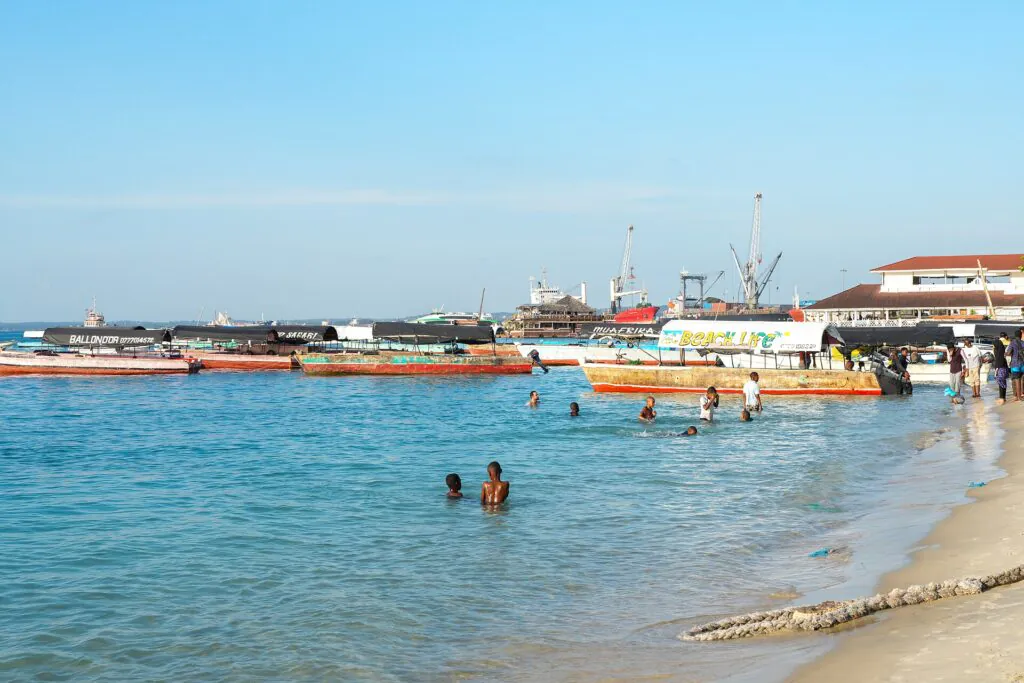
- Avoid walking alone after dark, especially in Dar es Salaam, Arusha and Stone Town.
- Do not carry jewellery, cameras or phones openly in crowds; carry bags on the side away from the road.
- Use a hotel safe, and keep copies of your passport separate from the original.
- Use taxis arranged by your hotel or operator rather than hailing unknown cars.
- If someone snatches a bag, let it go.
Common scams and how to avoid them
| Scam or risk | How it works | What to do |
|---|---|---|
| Touts at ports and bus stations (“papaasi”) | Unlicensed touts meet ferries or buses, say your hotel is closed, and steer you to places that pay commission | Pre-book your hotel and transfer; say politely “I have already made arrangements” |
| Fake guides and deposits | A “guide” or agent takes a deposit for a tour, car or room and disappears | Pay only licensed companies; ask to see a guide’s ID and verify it through your hotel |
| Unregistered boats | Cheap excursions on boats that are not registered or insured | Book through your hotel or a reputable agency |
| Fake officials | Someone claiming to be police or immigration asks for a fine or a payment | Ask for ID and an official explanation; the FCDO says not to pay fines on the spot |
| Unlicensed safari sellers | Aggressive touts in Arusha offer cheap safaris with poor vehicles or safety | Check TATO membership and the operator’s reviews before paying |
| Drink or food spiking | Reported on long-distance buses | Do not accept food, drinks or cigarettes from strangers |
A caution about old advice: some widely quoted safety articles are several years old (one popular crime guide is dated 2018). So check the date of anything you read.
Theft and personal belongings
- Split cash and cards between bags; carry only what you need for the day.
- Keep valuables in your hotel safe or locked luggage.
- Do not leave bags visible in vehicles, and keep car doors locked.
- Take out travel insurance that covers theft, medical care and evacuation.
- Photograph your documents and store the copies securely online.
Road safety and domestic flights
Roads are the biggest everyday risk. The FCDO describes poor driving standards, frequent dangerous overtaking and serious accidents, and advises avoiding driving outside towns at night. The CDC advises avoiding motorbike taxis and overcrowded buses and minivans, wearing seatbelts, sitting in the back seat, and travelling in daylight, especially in rural areas (CDC).
- Let your safari company handle long road transfers with an experienced driver-guide.
- Rainy seasons bring flooding and landslides, and park tracks may need a 4WD. See when to go.
- For domestic flights, the FCDO advises using only airlines on its Air Safety List; ask your operator which carrier is used.
- Ferries between Dar es Salaam and Zanzibar have a poor safety history in the past, according to the FCDO. Do not board an overloaded ferry, and note where life jackets and exits are.
Is Tanzania safe for solo female travellers?
Many women travel alone in Tanzania without problems, and independent travel guides generally rate it as one of the more manageable countries in the region. The FCDO nevertheless notes verbal harassment of women travelling alone or in small groups, and sexual assaults on foreigners, including at beach resorts.
- Dress modestly, especially in Stone Town and other Muslim areas (shoulders and knees covered).
- Avoid remote beaches alone, particularly on Zanzibar and Pemba, and avoid going out alone at night.
- Use transport arranged by your accommodation or operator.
- Joining a small group or private guided safari adds company and security.
- Limit alcohol and never leave a drink unattended.
Is Tanzania safe for families?
Families travel widely on safari. Choose lodges with fenced grounds, family suites near the main area and night escorts, and tell the operator the ages of your children when you book. Water safety matters: swim only in designated areas and avoid fresh water, because schistosomiasis is found in Tanzania (CDC). Children should never walk around camp unaccompanied after dark. See our safari packages and ask us about family-friendly camps.
LGBTQ+ travellers
Same-sex sexual acts are illegal in Tanzania and Zanzibar. The US advisory has flagged the targeting of gay and lesbian individuals. Travellers should be discreet, avoid public displays of affection, and read their own government’s advice.
Health precautions
Malaria is the most important health risk for most visitors. The CDC reports risk in all areas below 1,800 m and recommends seeing a doctor at least a month before departure. It also advises against swimming in fresh water, warns that rabies is common in dogs and present in some wildlife, and says anyone bitten or scratched should wash the wound and seek care at once. Heat illness can be serious: drink regularly and use sunscreen. Climbers should discuss altitude sickness with a doctor (see our Kilimanjaro guide).
This is general information, not medical advice. A qualified doctor or travel clinic should advise you on vaccines and malaria prevention for your own health.
Medical facilities, insurance and emergencies
Medical care in Dar es Salaam and Arusha is the most developed, and serious emergencies in the safari areas often involve evacuation. The CDC notes that trauma care is uncommon outside urban areas and that emergency care may not meet the standard of your home country. It advises buying medical evacuation insurance alongside travel health insurance. Check that your policy covers safari activities and, if relevant, high-altitude trekking.
- Emergency numbers: 112 or 999 in Tanzania (CDC).
- Register with your embassy or consulate’s traveller programme if one exists.
- Keep your operator’s emergency contact and your insurer’s 24-hour number saved offline.
Practical safety checklist
- Read your government’s current advice and register your trip if offered.
- Take out insurance with medical evacuation before you travel.
- See a doctor or travel clinic at least a month before departure.
- Book with licensed operators and pre-book your first night and airport transfer.
- Carry copies of documents and a small amount of cash.
- Avoid demonstrations and large gatherings, and do not photograph protests or security forces.
- Do not drive at night outside towns; avoid motorbike taxis.
- Follow your guide’s instructions in every park.
Common mistakes
- Relying on old safety articles instead of current official advice.
- Booking the cheapest operator from a tout without checking its licence.
- Assuming that everything in Tanzania is equally risky, or equally safe: risk depends on the place and the activity.
- Leaving the vehicle for a photograph.
- Travelling without evacuation insurance.
- Skipping malaria advice because the trip is short.
Frequently asked questions
Is Tanzania safe for tourists right now?
Is it safe to go on safari in Tanzania?
Is Zanzibar safe?
Is Dar es Salaam safe?
Is Tanzania safe for solo female travellers?
Is Tanzania safe for families with children?
What are the biggest risks for tourists?
Do I need travel insurance for Tanzania?
What number do I call in an emergency?
Are there places in Tanzania tourists should avoid?
Conclusion
Tanzania is a rewarding and generally safe destination when you take sensible precautions: follow current official advice, travel with licensed operators, respect wildlife rules, protect your belongings, insure yourself properly and get medical advice early.
So, is Tanzania safe? For most travellers, yes, with sensible precautions. Ready to explore Tanzania? Discover our Tanzania safari experiences and contact Vista Treks & Safaris to plan your trip with a licensed local team.