How many days for a Tanzania safari? For most first-time visitors, seven days is the sweet spot: long enough to see the Serengeti and Ngorongoro Crater without constant driving. Four or five days work for a short Northern Circuit trip, eight or more days suit anyone chasing the Mara River crossings. Ten to fourteen days let you add Zanzibar, Kilimanjaro or the southern parks. The right number depends on your budget, your interests and how far you are willing to travel each day.
This guide explains what each trip length realistically covers, how to avoid rushing, and how to combine a safari with Zanzibar. Wildlife cannot be guaranteed on any day, and the examples are sample structures, not fixed tour packages.
Quick answer
| Trip length | What it suits | What it typically covers |
|---|---|---|
| 3–4 days | Short break, tight budget, add-on to a Kilimanjaro climb | Ngorongoro Crater with Tarangire and/or Lake Manyara; usually no Serengeti |
| 5–6 days | A first safari with limited time | Tarangire, Serengeti and Ngorongoro, with some long drives |
| 7–8 days | Most first-timers; migration seekers | Serengeti with enough time for several game drives plus Ngorongoro |
| 10 days | Safari plus beach | About seven days of safari plus three or four on Zanzibar |
| 12–14 days | Photographers, families, repeat visitors | Extended Serengeti stays, Zanzibar or southern parks |
Source: published travel guides. These are guides from other operators; use them as planning benchmarks.
Why trip length matters
Tanzania’s best-known parks are large and far apart. One published guide notes that the drive from Arusha to the Serengeti “can take 8 hours”. One published guide calls it “a full day’s drive”. The more parks you try to fit into few days, the more hours you spend in a vehicle instead of watching wildlife. A single Serengeti night barely leaves time for a game drive after the journey in.
Ideal safari duration for first-time visitors
One published guide says the ideal duration for most first-time visitors is 7 to 10 days on the Northern Circuit, which covers the Serengeti, Ngorongoro Crater and Lake Manyara or Tarangire without feeling rushed. One published guide similarly suggests about a week for a safari only. If you have fewer days, you can still have an excellent trip. But you will trade away either the Serengeti or the relaxed pace.
Read what a day looks like in our guide to your first safari.
Short 3-day and 4-day safari options
A 3-day route usually visits one park a day, for example Tarangire, Lake Manyara and Ngorongoro Crater, using short drives from Arusha and skipping the Serengeti. A four-day trip suits a budget, or an add-on to a Kilimanjaro climb.
- Advantages: lower cost, little travel time, ideal after a climb.
- Limitations: no Serengeti, fewer game drives, and a rushed feel.
- Our example: the 4-day Tanzania Big Five safari.
5-day and 6-day itineraries
Five or six days allow a taste of the Serengeti. A typical five-day structure is Tarangire on day 1, the highlands to the central Serengeti on day 2, a full Serengeti day, then Ngorongoro and Manyara or Arusha. One published guide calls six days a sweet spot: Tarangire, two days in the central Serengeti, Ngorongoro Crater and a final day at Lake Manyara.
- Advantages: a good first-timer balance if time is tight.
- Limitations: long drive days and only two Serengeti nights.
For a cultural option, see our 5-day Tanzania cultural experience.
7-day and 8-day safari experiences
Seven days is the most popular first safari. It allows about three Serengeti nights, plus Tarangire or Manyara and Ngorongoro Crater. Eight days add time in a second Serengeti area or a more relaxed pace.
- Advantages: time to settle into the rhythm of game drives and increase your chances of key sightings.
- Limitations: still no time for Zanzibar or the southern parks.
- Our examples: the 7-day Great Migration safari and the 8-day Great Migration safari.
10-day and 14-day Tanzania journeys
A ten-day trip is often seven days of safari plus three or four days on Zanzibar. Twelve days allow extended stays in particular Serengeti areas for photography. Two weeks or more let you combine regions, add a chimpanzee trek, or visit southern parks such as Ruaha or Nyerere.
See our 12-day Tanzania and Zanzibar safari.
Serengeti and Ngorongoro combinations
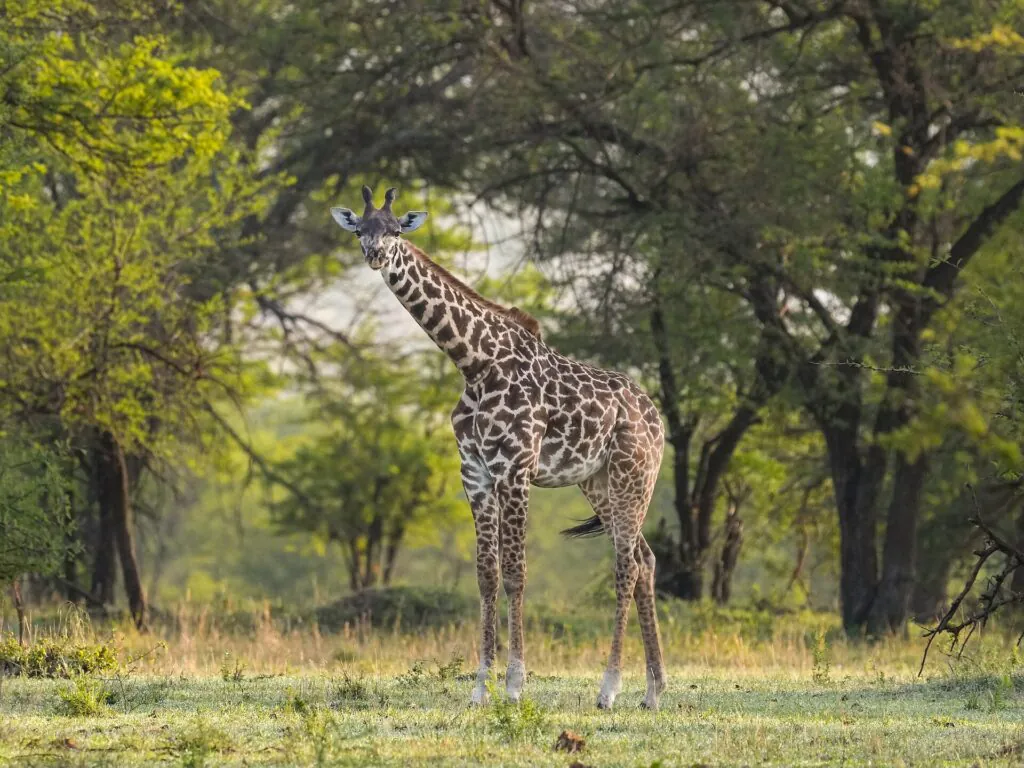
The Serengeti and Ngorongoro Crater are a classic pairing. Ngorongoro is a conservation area with year-round wildlife on the crater floor, while the Serengeti offers vast plains and migration. A common structure is two or three nights in the Serengeti followed by a night near the crater rim and a morning descent. See the Serengeti and Ngorongoro pages.
Please do not upload an edited image here without consulting me. I would like to make corrections only at my own source to ensure that the changes improve the image and are preserved.Otherwise you may upload an edited image with a new name. Please use one of the templates derivative or extract. / Wikimedia Commons, CC BY-SA 4.0
Tarangire and Lake Manyara combinations
Tarangire is known for elephants and baobab trees, especially in the dry season, and Lake Manyara offers varied scenery and birdlife. Together they make a compact two- or three-day start or finish to a longer circuit, close to Arusha. See Tarangire and Lake Manyara.
The Northern Tanzania safari circuit
The Northern Circuit links Tarangire, Lake Manyara, Ngorongoro and the Serengeti, and is usually driven from Arusha. A ten-day version uses about five Serengeti nights and a fuller pace; a seven-day version trims the extras. Choose fewer parks with more nights in each rather than more parks with fewer nights.
Planning for the Great Migration
The Mara River crossings generally take place between July and October in the northern Serengeti, according to one published guide, which recommends at least three days in the Northern Serengeti to improve the chance of seeing a crossing. Calving takes place in the southern plains in January to March. Because the herds follow the rain, no itinerary can guarantee a sighting. See our best time to visit Tanzania for month-by-month detail.

Travel time between destinations
| Leg | What guides say |
|---|---|
| Arusha to Serengeti by road | About a full day; one published guide says it can take 8 hours |
| Arusha to Tarangire, Manyara | Short drives from Arusha |
| Within the Northern Circuit | Park-to-park drives vary with road conditions and the season |
Ask your operator for the planned drive times on each day, and note that wet-season roads can be slower.
Domestic flights versus road transfers
Flying into the Serengeti by bush plane saves a long drive but costs more and limits luggage to roughly 15 kg per person in soft bags on some airlines. Road transfers are cheaper and let you see the landscape, but long days are tiring. Many travellers drive one way and fly the other. Southern and western parks usually need flights. Our packing list explains luggage limits.
Family safari duration
Children tire quickly on long drives, so families often do better with fewer parks and more nights in each. With a lodge that has a pool. Six to eight days is common. Choose shorter game drives and flexible schedules, and check minimum ages at lodges.
Honeymoon safari duration
Honeymooners often pair six to eight days of safari with four to six relaxing days on Zanzibar. A private vehicle and unhurried mornings help. Build in rest days.
Combining a safari with Zanzibar
Both guides recommend a “bush to beach” sequence: about seven days of safari followed by three or four days on Zanzibar. Put the beach last, so you rest after early starts. See our 6-day Zanzibar holiday and Zanzibar page.
How many days for a Tanzania safari is right for you?
| If your priority is… | Aim for |
|---|---|
| Lowest cost | 3–5 days, Tarangire, Manyara and Ngorongoro |
| A first Serengeti safari | 6–8 days |
| The river crossings | 8+ days with at least three nights in the north |
| Safari and beach | 10–12 days |
| Photography | 10–14 days with long Serengeti stays |
| Big adventure | 14+ days with southern parks or Kilimanjaro |
Trade-offs: shorter trips cost less and need less time off. But longer trips give more game drives, better pacing and more chance of memorable sightings.
Common mistakes
- Trying to fit too many parks into too few days.
- Spending only one night in the Serengeti.
- Ignoring the season and migration calendar.
- Scheduling a long drive on the day of your international flight.
- Skipping a rest day before a Kilimanjaro climb or after one.
Frequently asked questions
How many days do I need for a Tanzania safari?
Is 3 days enough for a Tanzania safari?
Is 4 days enough for the Serengeti?
How many days do I need in the Serengeti?
How many days for Ngorongoro Crater?
How long should a family safari be?
How long should a honeymoon safari be?
How many days for a safari and Zanzibar?
Should I fly or drive between parks?
How far in advance should I book?
Conclusion
Choose your length by what you want to see, not by the number of parks you can name. Seven days is a strong start, eight or more for crossings, ten or more with Zanzibar.
So, how many days for a Tanzania safari? Seven for most first-timers, more if you add Zanzibar. Ready to explore Tanzania? Discover our Tanzania safari packages and contact Vista Treks & Safaris to start planning your adventure.