In the Tanzania vs Kenya safari debate, neither country is simply “better”. Tanzania suits travellers with a week or more who want space, the full Great Migration story, calving season, Ngorongoro Crater, Kilimanjaro or Zanzibar. Kenya suits shorter trips, travellers who want an easy Nairobi arrival, private conservancies with walking and night drives, and the best chance of rhino. Wildlife quality is excellent in both, and your guide matters as much as the border.
Vista Treks & Safaris is a Tanzania-based operator, so we declare our bias: we know Tanzania best. This guide tries to be fair, uses published sources with dates, and tells you when Kenya is the better choice.
Quick answer
| If you want… | Better fit |
|---|---|
| A short trip of 3–4 days in July–October | Kenya (Maasai Mara) |
| A first safari of a week or more | Tanzania, or either |
| The full migration calendar and calving | Tanzania |
| Rhino sightings | Kenya (Tanzania’s are mostly distant in Ngorongoro) |
| Fewer vehicles and big open space | Tanzania’s Serengeti, or Kenya’s conservancies |
| Walking, night drives, off-road driving | Kenya’s private conservancies |
| Ngorongoro, Kilimanjaro or Zanzibar | Tanzania |
| Easy international access | Kenya (Nairobi hub) |
Tanzania versus Kenya at a glance
| Factor | Tanzania | Kenya |
|---|---|---|
| Famous reserve | Serengeti (about 14,750 km²) | Maasai Mara (about 1,500 km²) |
| Migration | Herds in Tanzania most of the year; calving January–March; northern crossings about August to mid-October | Herds in the Mara roughly August to mid-October; crossings in the main reserve |
| Rhino | Mostly distant sightings in Ngorongoro Crater | More reliable at Ol Pejeta, Lake Nakuru and Nairobi National Park |
| Landscapes | Open plains, Ngorongoro Crater, Tarangire baobabs, Kilimanjaro views | Mara grasslands, Amboseli with Kilimanjaro backdrop, Samburu dry country |
| Style | National park game drives with set rules | Private conservancies allow walking, night drives and off-road driving |
| Coast | Zanzibar | Diani, Lamu, Watamu |
| Gateway | Kilimanjaro or Arusha | Nairobi |
| Typical trip length | 7+ days | 3–7 days |
Source: published travel guides.
Wildlife diversity
Both countries have the Big Five, big cats, giraffe, zebra, hippo and enormous herds. Each has some species the other lacks: northern Kenya’s Samburu has the reticulated giraffe, Grevy’s zebra and gerenuk, while Tanzania has chimpanzees at Gombe and Mahale and remote southern wilderness at Ruaha, Nyerere and Katavi. Tarangire’s elephant herds and Ngorongoro Crater’s concentration of animals are Tanzanian highlights. One published guide calls wildlife quality a tie.
Serengeti versus Maasai Mara
The Serengeti is roughly ten times the size of the Mara. In the Serengeti you can drive for an hour without seeing another vehicle, though central Seronera and the busiest crossing points are crowded in peak season. The Mara is compact, so predators are concentrated and sightings can be rich. But the main reserve can be crowded in peak months, with dozens of vehicles at a big cat or a river crossing, according to one published guide. Neighbouring Kenyan private conservancies limit vehicle numbers.
See our Serengeti page.
The Great Wildebeest Migration
The herds circle between the two ecosystems. In Tanzania they are present most of the year, calving in the south from January to March and moving through the central, western and northern areas before reaching the Mara River. In Kenya they arrive in the Mara from about August and leave by mid-October. Many wildebeest never fully enter Kenya at all, and herds cross back and forth several times. See our month-by-month guide.

River crossing experiences
Crossings happen at the Mara River in both countries during roughly the same August to mid-October window. One published guide says crossing points in the northern Serengeti generally have slightly fewer vehicles than the Mara reserve, and that Kenya’s private conservancies do not have access to the crossings. No crossing can be guaranteed on any given day in either country.
See our 7-day Great Migration safari.
Big Five wildlife viewing
Lion, leopard, elephant and buffalo are well represented in both countries. Rhino is the difference: Tanzania’s black rhinos are mostly seen at a distance in Ngorongoro Crater, while Kenya has more accessible rhino at Ol Pejeta, Lake Nakuru and Nairobi National Park.
National park landscapes
Tanzania offers vast plains, the Ngorongoro Crater, the baobabs of Tarangire and the Kilimanjaro climb. Kenya offers the Mara grasslands, Amboseli’s elephants against Kilimanjaro, and the dry north. Choose by the scenery you picture.
Safari accommodation
Both countries have everything from camping to luxury. In Kenya, premium conservancy stays are priced at about US$600 to over US$1,500 per person per night plus conservancy fees according to one 2026 guide. In Tanzania, nightly concession fees apply to properties inside parks, and prices rise in the Serengeti in July to September.
Tanzania vs Kenya safari costs and park fees
Published figures vary by source and date, so treat them as a guide and confirm with your operator.
| Park fee (non-resident adult, per day) | Published figure | Source and date |
|---|---|---|
| Serengeti (Tanzania) | US$82.60 including 18% VAT (about US$70 before VAT in one source) | published travel guides, 2026 |
| Ngorongoro Crater (Tanzania) | US$295 vehicle descent fee, plus entry fees | Several 2026 guides |
| Maasai Mara reserve (Kenya) | US$200 (July–December); US$100 (January–June) | one published guide, published 14 July 2026; also quoted by one published guide |
| Amboseli and Lake Nakuru (Kenya) | US$90 | one published guide, July 2026 |
The Mara fee is higher than the Serengeti’s in peak season. But a full trip depends on accommodation, flights and trip length. One published guide notes inconsistencies in its own peak-season definition, so confirm with your operator. Kenya is often cheaper for short Nairobi-based routes, and premium Mara stays can match or exceed Tanzania. Tanzania tends to cost more for long multi-park circuits. See our safari cost guide.
Crowds and visitor experience
Both are busiest from July to October. Crowds depend more on where you stay than on the country: Seronera and the crossing points in the Serengeti, the main Mara reserve and Ngorongoro Crater are busy. The western Serengeti, southern plains, Tarangire in the green season and Kenya’s private conservancies are quieter.
Private versus shared safaris
Both countries offer private and shared vehicles. Kenya’s conservancies add flexibility, including guided walks, off-road driving and night drives, with strict vehicle limits. Tanzanian national parks have set rules and driving hours, though some private concessions in Tanzania offer walking. Private safaris cost more per person for one or two travellers.
Family travel
Kenya’s Nairobi to Mara route is simple and good for shorter family trips. Tanzania works for families with a slower pace, two or three nights at each base and a private vehicle. See our guide to how many days you need.
Photography opportunities
Kenya’s conservancies allow off-road access and flexible hours; Tanzania offers vast plains, the contained beauty of Ngorongoro, and calving-season drama. Both reward patience and a good guide.
Accessibility and international flights
Nairobi is a large international hub with easy connections. Tanzania’s gateways are Kilimanjaro and Dar es Salaam, and bush flights often cut long drives. Entry rules differ: Kenya uses an electronic travel authorisation (about US$30 in one source), while Tanzania uses a visa. See our Tanzania visa guide and confirm Kenya’s rules with official sources.
Safari seasons
Both countries share the long dry season from June to October and the green seasons. Tanzania adds calving in January–March and a fuller migration calendar. Kenya’s peak is the Mara crossing period from August to October. Green-season trips are cheaper in both.
Zanzibar versus Kenya’s coast
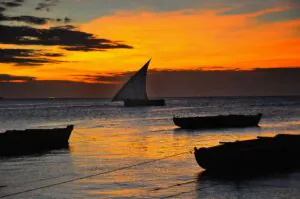
Zanzibar is a short flight from the Serengeti or Arusha and combines easily with a safari. Kenya’s coast offers Diani, Lamu and Watamu. Pick Zanzibar for Stone Town, spice culture and a straightforward add-on. Kenya’s coast suits those who want to combine with Nairobi and the Mara. See our Zanzibar page.
Tanzania vs Kenya safari: which suits which traveller?
| Traveller | Suggestion |
|---|---|
| First safari, one week or more | Tanzania or Kenya; Tanzania if you want the longer migration story |
| First safari, 3–4 days | Kenya |
| Calving season (January–March) | Tanzania |
| River crossings (August–October) | Either; book early |
| Rhino spotters | Kenya |
| Walking and night drives | Kenya’s conservancies |
| Kilimanjaro or Zanzibar add-on | Tanzania |
| Photographers | Both; Tanzania for landscape, Kenya for access |
| Families | Kenya for short trips; Tanzania with a slower pace |
Can you do both?
Yes, but it needs 12–14 days or more, and flights between the countries are usually better than long road transfers. Vehicles cannot normally cross the border, so plan the route carefully.
Common mistakes
- Choosing by a single price figure without comparing what is included.
- Expecting a guaranteed crossing.
- Trying to cover both countries in too few days.
- Ignoring the season.
- Assuming one country is always more crowded.
Frequently asked questions
Is Tanzania or Kenya better for safari?
Is the Serengeti better than the Maasai Mara?
Where is the best place to see the Great Migration?
Which country is cheaper for safari?
Can I see rhino in Tanzania?
Is Kenya more crowded than Tanzania?
Which is better for families?
Can I combine Kenya and Tanzania?
Do I need different visas?
What is the best time for each?
Conclusion
Choose Tanzania for space, the full migration calendar and add-ons such as Kilimanjaro and Zanzibar. Choose Kenya for short trips, rhino and conservancy freedom. Either way, book a licensed operator and match your dates to the wildlife you want to see.
In the end, the Tanzania vs Kenya safari choice depends on your time, budget and interests. Ready to explore Tanzania? Discover our Tanzania safari experiences and contact Vista Treks & Safaris to start planning your adventure.